Play Doh Kitchen Creations Cookie Creations Toy Hub
PlayDoh Kitchen Creations Playset New Playdough Stove YouTube
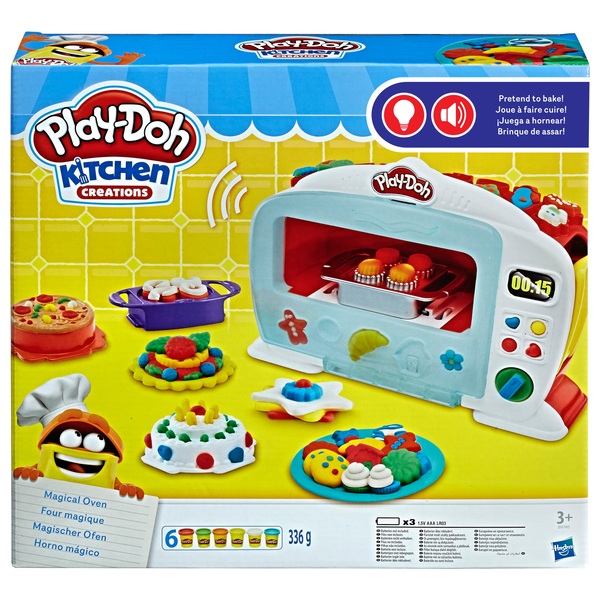
PlayDoh Kitchen Creations Magical Oven PlayDoh UK
PlayDoh Kitchen Creations Magical Oven PlayDoh UK
PlayDoh Kitchen Creations Magical Oven Set – Bargain Games UK
play-Doh (similar to "dough") is a modeling mixture used by small children for arts and crafts jobs at home. It is made up of flour, water, salt, borax, and mineral oil. The merchandise was first produced in Cincinnati, Ohio, United States, as a wallpaper cleaner in the 1930s.The merchandise was reworked and promoted to Cincinnati institutions in the mid-1950s. Play-Doh was demonstrated at an educational convention in 1956 and visible department stores opened up retail accounts.Advertisements promoting Play-Doh on important children's television shows in 1957 furthered the product's sales.Since its introduction on the toy market in the mid-1950s, Play-Doh has generated a great deal of ancillary merchandise like the Fun Manufacturing plant. In 2003, the Toy Industry Association known as Play-Doh in its "Century of Playthings List"OriginObjects made out of Play-Doh.The non-toxic, non-staining, reusable modeling chemical substance that came to be known as "Play-Doh" was a pliable, putty-like product concocted by Noah McVicker of Cincinnati-based soap company Kutol Products. It had been devised at the need of Kroger Grocery store, which wanted a product that may clean coal residue from wallpaper.Following World Conflict II, with the change from coal-based home heating to gas and the producing decrease in inner soot, and the launch of washable vinyl-based wallpaper, the market for wallpaper cleaning putty lowered greatly. McVicker's nephew, Joe McVicker, signed up with Kutol with the remit to save lots of the company from personal bankruptcy. Joe McVicker was the brother-in-law of nursery college instructor and Zufall had seen a magazine article about making skill assignments with the wallpaper cleaning putty.Her students relished it, and she persuaded Noah McVicker (who also sold the putty) and Joe McVicker to make it as a child's toy. Zufall and her spouse developed the name Play-Doh; Joe McVicker and his uncle Noah acquired wished to call it "Rainbow Modeling Element".Play-Doh's current company, Hasbro, shows the ingredient is primarily a mixture of water, salt, and flour, while its 2004 United States patent implies it comprises water, a starch-based binder, a retrogradation inhibitor, sodium, lubricant, surfactant, preservative, hardener, humectant, fragrance, and color. A petroleum additive provides compound a clean feel, and borax prevents mold from growing. Play-Doh consists of some wheat and may cause allergies in folks who are allergic to whole wheat gluten. It is not designed to be eaten.
Related Images with Play Doh Kitchen Creations Cookie Creations Toy Hub
source image play doh kitchen creations from www.toyhubdirect.co.uk
aquabeads are educational children's toys, where children can organise beads and make their very own creationson the plate which has been provided, the plate itself is already available in every package of purchase, beadosMade of Environmentally friendly plastic material, odorless and non-toxic, safe to perform withVisual, hands-on mind, grasping, intellectual development, emotion, hand-eye coordination,parent-child communication Rich colors, lovely appearance, may also be necklaces pendantsBeans are automatically affixed along with water Improving kid's color recognition ability, promoting parent-child communicationYou may make it fun, add the playing this, more enjoyable Suggestions and TipsWhen beads do not stick properly, spray some more water upon the back of the particular design and leave to dry.When the back of a bead design is not really glossy, spray several more water on the particular back and leave in order to dry.If your bead design starts to flex, place the desig...
Peppa Pig Play Doh playset is Peppa Pig Play Dough Colours Playset using play doh – Kids Toys 32 Doh! Dogs That Ruined The Holidays BarkPost Little House in the Big D: DIY Safe to Eat, Homemade PlayDoh Recipe Two guys made real food using PlayDoh tools delish! play-Doh (similar to "dough") is a modeling chemical substance used by young children for arts and crafts assignments at home. It is made up of flour, water, sodium, borax, and nutrient oil. The merchandise was first created in Cincinnati, Ohio, United States, as a wallpaper cleaner in the 1930s.The product was reworked and marketed to Cincinnati schools in the mid-1950s. Play-Doh was confirmed at an educational convention in 1956 and visible department stores exposed retail accounts.Advertisements promoting Play-Doh on important children's television set shows in 1957 furthered the product's sales.Since its introduction on the toy market in the middle-1950s, Play-Doh has generated a considerable amount of anc...
Find Holiday Shopping Deals with Local4Shopping Mrs. Webers Neighborhood Doh, Play Doh Double Treat Ice Cream Set Banana Split Sundae Sweet Shoppe Desserts n Treats by Play Doh Sweet Shoppe Perfect Twist Ice Cream Dessert Playset! YouTube Playdoh Magic Swirl Ice Cream Shoppe Gift Set By Hasbro $36 play-Doh (similar to "dough") is a modeling ingredient used by small children for arts and crafts jobs at home. It is composed of flour, water, sodium, borax, and mineral oil. The product was first created in Cincinnati, Ohio, USA, as a wallpaper cleaner in the 1930s.The merchandise was reworked and marketed to Cincinnati universities in the mid-1950s. Play-Doh was proven at an educational convention in 1956 and dominant department stores opened up retail accounts.Advertisements promoting Play-Doh on important children's television shows in 1957 furthered the product's sales.Since its launch on the toy market in the mid-1950s, Play-Doh has generated a great deal of ancil...



Comments
Post a Comment